
World’s Fastest ‘Flying Train’: Inside the Ultra-Speed Journey Operating in Just Two Countries
Explore the World’s Fastest ‘Flying Train’: Inside the Ultra-Speed Journey Operating in Just Two Countries. Discover China T-Flight, SCMaglev, maglev trains, and hyperloop technology reshaping travel with record-breaking speeds, futuristic engineering, and eco-friendly innovation.
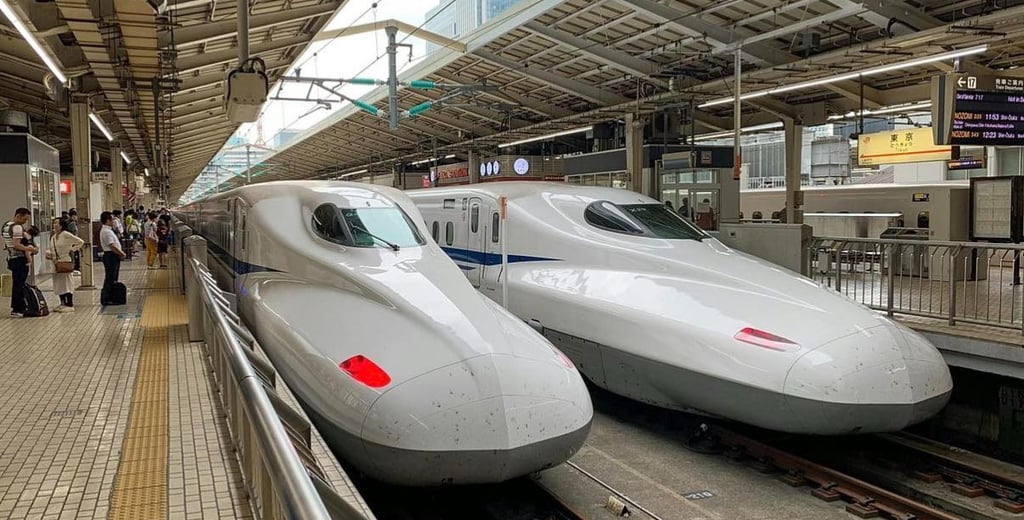
World’s Fastest ‘Flying Train’: Inside the Ultra-Speed Journey Operating in Just Two Countries
Imagine boarding a train that seems to defy gravity, floating above the tracks and gliding at astonishing speeds. This isn’t a scene from science fiction — it’s the reality of maglev technology, and right now, these trains operate in only two countries: China and Japan. In this article, we’ll explore the world’s fastest ‘flying trains’, their technology, speed records, and what the future holds for ultra-fast rail travel.
Fastest Train in the World: How Maglev Is Changing Travel
When most people think of trains, they picture wheels rolling on metal tracks. But the fastest train in the world floats above the guideway using powerful magnetic forces. These Maglev Trains remove friction, allowing speeds far beyond traditional high-speed rail. (en.wikipedia.org)
Unlike conventional trains, maglev technology eliminates contact with rails, producing a smooth, quiet ride while pushing speed limits higher than ever before. It’s not just fast — it’s a glimpse into the future of travel.
China Fast Train 1000 KM/H: Pushing Boundaries with T-Flight
China has been at the forefront of ultra-high-speed rail. The latest development, the T-Flight, has already reached 387 mph (623 km/h) in controlled tests, with projections suggesting speeds could reach 621 mph (1,000 km/h). (sciencetimes.com)
The China T-Flight represents a leap forward, blending maglev with hyperloop-like technology, moving through near-vacuum tubes to minimize air resistance. This allows China to connect cities faster than a plane would while avoiding airport delays.
Bullet Train Speed vs. Supersonic Train Oasis: Japan’s SCMaglev
Japan is home to the SCMaglev, which has broken records by hitting 603 km/h (375 mph) on a test track. Compared to conventional bullet train speed of around 275 mph, the SCMaglev is a supersonic train oasis, a futuristic alternative that makes intercity travel dramatically faster. (jrailpass.com)
The upcoming Chuo Shinkansen line will connect Tokyo and Osaka, offering commuters a ride that redefines what’s possible on land.
Maglev Train Technology Explained: Step-by-Step
Understanding the world’s fastest flying trains means knowing the magic behind maglev trains:
Magnetic Levitation: Powerful magnets lift the train off the track, eliminating friction.
Superconducting Magnets: Advanced trains like SCMaglev use magnets cooled to extremely low temperatures to maintain strong magnetic fields efficiently.
Linear Motor Propulsion: Instead of rotating wheels, a linear motor pushes and pulls the train along the guideway.
Reduced Wear and Tear: No contact with the track means minimal maintenance and smoother operation.
The result? Ultra-high speeds, smooth rides, and quieter travel. (spectrum.ieee.org)
T-Flight Train Speed: A Step Towards the Future
The T-Flight Train Speed is unmatched in tests. Here’s how it compares:
✈️ Boeing 737: 560‑586 mph
🚄 SCMaglev: 375 mph
📍 T-Flight: 387 mph (tested), projected 621 mph
🛸 Aspirational: 1,243 mph (nearing supersonic speeds)
Travelers could go from Beijing to Shanghai in just over an hour, or London to Barcelona in 90 minutes, making business and leisure travel radically more efficient. (sciencetimes.com)
Hyperloop Train vs. Maglev Train: What’s the Difference?
While maglev trains glide on magnetic fields above tracks, hyperloop trains move through low-pressure vacuum tubes, reducing air resistance to achieve even greater speeds.
Maglev: Open-air travel, extremely fast, proven in Japan and China.
Hyperloop: Ultra-high speed potential, limited by infrastructure costs and engineering challenges.
The T-Flight is a hybrid concept, combining both for maximum efficiency. (sciencetimes.com)
China T-Flight: Connecting Mega-Cities
The China T-Flight aims to connect major metropolitan areas for speedier travel:
Beijing ↔ Shanghai: ~1 hour
San Francisco ↔ LA equivalent: 35 minutes (hypothetical global expansion)
Expanding Belt and Road connections: Laos, Vietnam, and Korea
The goal isn’t just speed — it’s economic integration and societal convenience, similar to 19th-century railroad booms. (sciencetimes.com)
A Passenger’s Perspective: Riding the Supersonic Train Oasis
Imagine stepping on board, watching the scenery blur, and arriving in record time. Maria, a visitor to Shanghai, described it as “like flying on the ground.” This anecdote captures the awe and excitement these trains inspire, making ultra-fast travel tangible for anyone.
The supersonic train oasis experience is less about leisure and more about functional, efficient transportation, reshaping daily travel expectations.
Environmental Impact of Ultra-Speed Trains
High-speed trains like T-Flight and SCMaglev are more environmentally friendly than airplanes:
Reduced noise pollution
Zero direct emissions when powered by clean energy
Efficient energy usage through levitation and vacuum tube technology
While energy-intensive at extreme speeds, these systems may significantly reduce greenhouse gas emissions for long-distance travel. (en.wikipedia.org)
Challenges Facing Ultra-Fast Maglev and Hyperloop Trains
Even futuristic systems face hurdles:
💸 High infrastructure costs
🔄 Vacuum tube maintenance
🧱 Limited public adoption initially
🔧 Engineering challenges: bends, pressure changes, and tunnel boom effects (theguardian.com)
China’s determination and resources, however, suggest these challenges can be overcome sooner than expected.
Looking Ahead: The Future of the World’s Fastest Flying Train
The world’s fastest ‘flying trains’ are more than just speed machines — they are harbingers of a transportation revolution:
Hyperloop expansion: Potential global networks
Integration with aviation: Reducing short-haul flights
Global adoption: India, Switzerland, Netherlands, US are testing ultra-high-speed rail
If successful, these innovations could replace planes for medium distances, providing fast, eco-friendly travel options for billions.
Conclusion
The World’s Fastest ‘Flying Train’: Inside the Ultra-Speed Journey Operating in Just Two Countries represents a leap in human ingenuity. From China’s T-Flight to Japan’s SCMaglev, these maglev trains are transforming travel by making it faster, cleaner, and more futuristic.
Whether you’re a traveler, engineer, or dreamer, the era of supersonic train oases is just beginning — and the journey is already underway.
Recommended Stories:
Exploring the Impact of the First Global Communication and Tourism Summit
French National Monuments Reach Historic Peak in 2025
UAE Visa Ban Countries List 2026: Which Nationalities Are Affected? | Exploreroamer
We’d love to hear from you!
Whether you have a question, suggestion, or want to collaborate — feel free to reach out.
info@exploreroamer.com
© 2025. All rights reserved.
Join Our Journey
Get travel tips and stories straight to your inbox